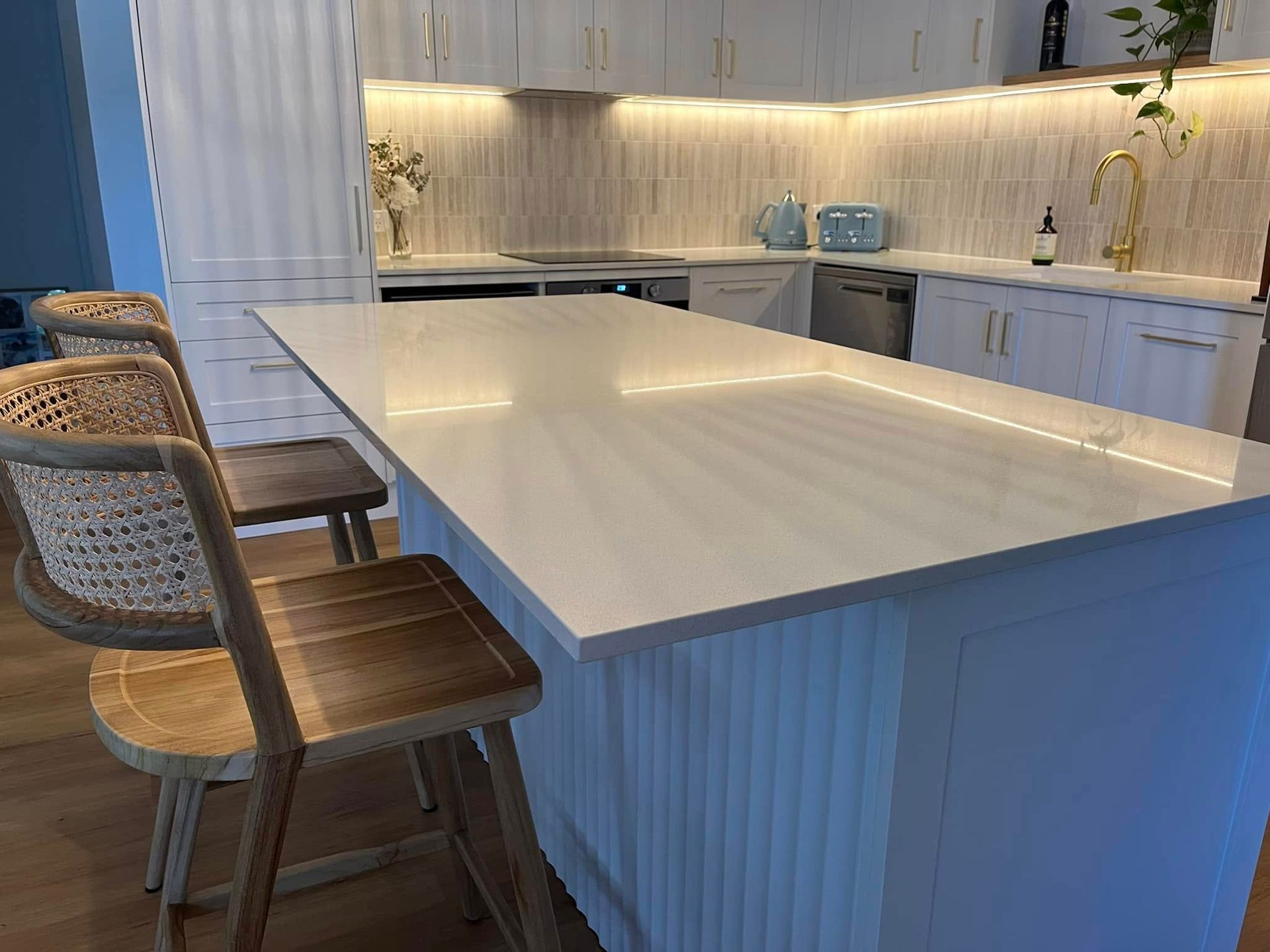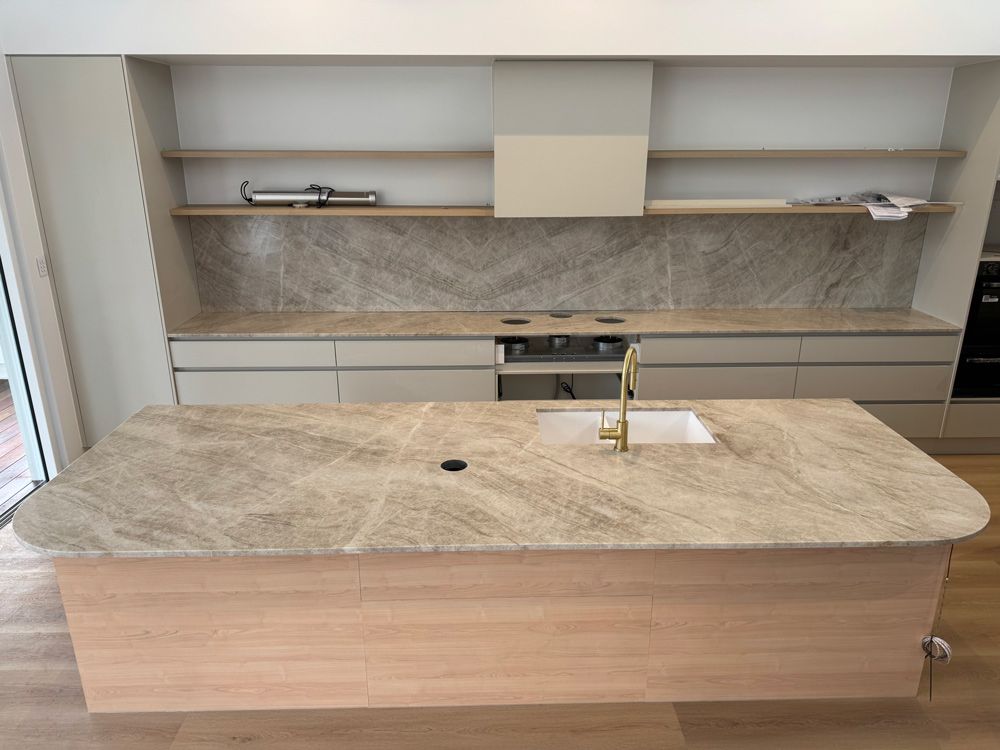
How To Maintain And Care For Stone Benchtops On The Gold Coast
Stone benchtops Gold Coast homeowners install today are almost always natural stone or porcelain, not the engineered slabs of the past. That matters, because caring for marble, granite or quartzite is a different job entirely to wiping down reconstituted stone. Get the routine right and your benchtop will look new for decades. Get it wrong and you'll be booking a repair sooner than you'd like.
The 60-Second Stone Benchtop Care Guide
If you only read one section, make it this one. Wipe up spills straight away, especially anything acidic like citrus, wine or sunscreen. Use a pH-neutral cleaner, never anything acidic or abrasive. Reseal natural stone annually (marble sometimes twice a year), and act fast on etch marks before they set in. Gold Coast conditions, coastal humidity, hard water and a lot of poolside citrus and sunscreen, make this routine more important here than in a drier inland climate.
Daily Cleaning: What to Use and Avoid
Daily stone benchtop maintenance, and knowing how to clean stone benchtops properly, is straightforward once you know what to avoid. A soft cloth, warm water and a stone-safe pH-neutral cleaner will handle almost everything. Dry the surface afterwards rather than letting water sit, particularly around sinks and tap fittings where hard water marks build up quickly in coastal areas. What to avoid is just as important as what to use. Skip anything acidic (vinegar, lemon-based sprays, citrus cleaners) and anything abrasive (scouring pads, gritty powders). These will dull the surface or, on marble especially, cause visible etching within seconds of contact. Bleach and ammonia-based products are also off the list, they break down sealers over time and leave stone more vulnerable to staining.
For an example: one Elite Stone client had a marble kitchen island etched by a squeeze of lemon during a Sunday roast, a dull, slightly rough patch appeared within the hour. That's the nature of marble; it's calcium-based, so acid reacts with the surface almost instantly. Granite benchtop maintenance is far more forgiving of the odd spill than marble, which is worth knowing if low-maintenance living matters more to you than the look of marble.
A few practical habits worth building in:
- Use a chopping board and trivets, even on granite and quartzite
- Blot spills, don't wipe them across the surface
- Avoid placing hot pans directly on marble
- Skip DIY polish and stone "restorer" products unless recommended by a professional
Do Natural Stone Benchtops Need Sealing?
Yes, and this is the biggest adjustment for anyone used to the old engineered stone, which never needed sealing at all. Sealing natural stone benchtops involves an impregnating sealer that sits below the surface and blocks liquids from soaking in before they can stain. As a general guide, granite typically needs resealing once a year. Marble benchtop care Gold Coast homeowners should follow involves resealing every 6-12 months, given marble's higher porosity, particularly on a well-used kitchen island. Quartzite sits somewhere between the two, depending on the specific slab. Porcelain is the outlier here, it's non-porous by nature and doesn't need sealing at all, which is a genuine point in its favour if upkeep is a concern.
A simple way to test whether your benchtop needs resealing: drop a few beads of water onto the surface. If it beads up, the seal is holding. If it soaks in and darkens the stone within a minute or two, it's time to reseal. Gold Coast's coastal humidity and hard water tend to wear sealers down faster than they would inland, so checking twice a year rather than relying on a fixed date is the safer habit.
Can Etch Marks and Chips Be Repaired?
Most surface issues are fixable without replacing the whole benchtop. Light etching on marble can often be buffed out with a honing compound or a light re-polish, a job best left to a professional rather than a DIY kit, since over-polishing can create an uneven sheen. Stains that have soaked in despite sealing can sometimes be drawn out with a poultice treatment, which pulls the substance back out of the pores over a day or two.
Chips and cracks are a different matter. Small chips, especially on an edge or corner, can usually be filled and colour-matched so they're barely visible. Deeper cracks, or damage across a large section of the slab, usually point to a professional recut or, in rare cases, a full replacement. As a rough guide, expect a straightforward re-polish or chip repair to be a same-day job, while a poultice treatment or recut will take longer and cost more, though pricing depends on the material and extent of damage. Damage beyond a home fix usually means a professional recut, something our custom stone benchtop installation team can assess on site before recommending repair over replacement.
Does Care Change Since the Engineered Stone Ban?
Since Australia's 2024 ban on engineered (reconstituted) stone, almost every new benchtop being installed is natural stone or porcelain, and the care routine is genuinely different from what engineered stone required. Engineered stone was largely non-porous and low-maintenance by design; it never needed sealing and shrugged off most acidic spills. Natural stone and porcelain both demand more attention, just in different ways.
Porcelain is the closest thing to a like-for-like swap in terms of upkeep, non-porous, no sealing required, resistant to heat and scratching. Natural stone (marble, granite, quartzite) brings unmatched character and depth but comes with the sealing and cleaning discipline outlined above. If you're weighing up a low-maintenance surface for a coastal kitchen, our range of stone benchtops Gold Coast homeowners rely on covers granite, quartzite and porcelain options built for the climate, alongside marble for those who want the look and are happy with the extra care it involves.
Searching stone benchtops near me on the Gold Coast will turn up plenty of options, so it pays to compare maintenance needs before deciding on a material. This applies across the home too, not just kitchen benchtops. Bathroom vanities, stone basins and laundry benchtops all sit in wetter, higher-humidity environments, so sealing schedules and spill habits matter just as much there as they do in the kitchen. Whichever material you've chosen or are considering, the fundamentals stay the same: know your stone, seal it on schedule, wipe up spills fast and call in a professional the moment something looks off rather than waiting. A well-maintained stone benchtop on the Gold Coast should easily outlast the kitchen it sits in.
Not sure which material suits your household yet? Our guide on how to choose the best stone benchtop for your Gold Coast home walks through lifestyle, budget and durability before you commit. And if you're unsure whether your current benchtop needs resealing or repair, get in touch with our team and we'll talk you through it.
FAQs
How often should I reseal a granite benchtop?
Roughly once a year for most Gold Coast homes, though it's worth doing a quick water-bead test every six months given the coastal humidity.
Can I use vinegar to clean my stone benchtop?
No. Vinegar is acidic and will etch marble almost immediately, and can gradually break down sealers on granite and quartzite too. Stick to a pH-neutral, stone-safe cleaner.
Is marble too high-maintenance for a busy kitchen?
Not necessarily, but it does need more discipline than granite or porcelain. If you want the marble look with less upkeep, ask about honed finishes or consider quartzite as a middle ground.
Do porcelain benchtops need sealing?
No. Porcelain is non-porous, so it doesn't require sealing and is one of the lowest-maintenance options available.
What's the difference between honing and polishing?
Honing creates a matte, low-sheen finish and can also remove light etching. Polishing restores a high-gloss shine. Both are best done by a professional to avoid an uneven result.
My benchtop has a stain that won't come out with cleaning, what now?
A poultice treatment, applied by a professional, can often draw out set-in stains over a day or two. If the stain persists after that, it's worth having the surface assessed for resealing or a light re-polish.